The Logic Inverts Somewhere Around Sary-Tash
There is a particular moment on the Pamir Highway when the usual grammar of travel — here is where I am going, here is how I am getting there — quietly stops making sense. You notice it somewhere around Sary-Tash, that small plateau settlement in southern Kyrgyzstan where the road forks and the Alai Valley opens out ahead of you, the mountains so large they read at first as weather rather than topography. You have been in a shared taxi for hours. The driver has not said much. The other passengers have eaten, slept, eaten again. And then the valley happens, and it becomes genuinely difficult to explain why you would want this to end.
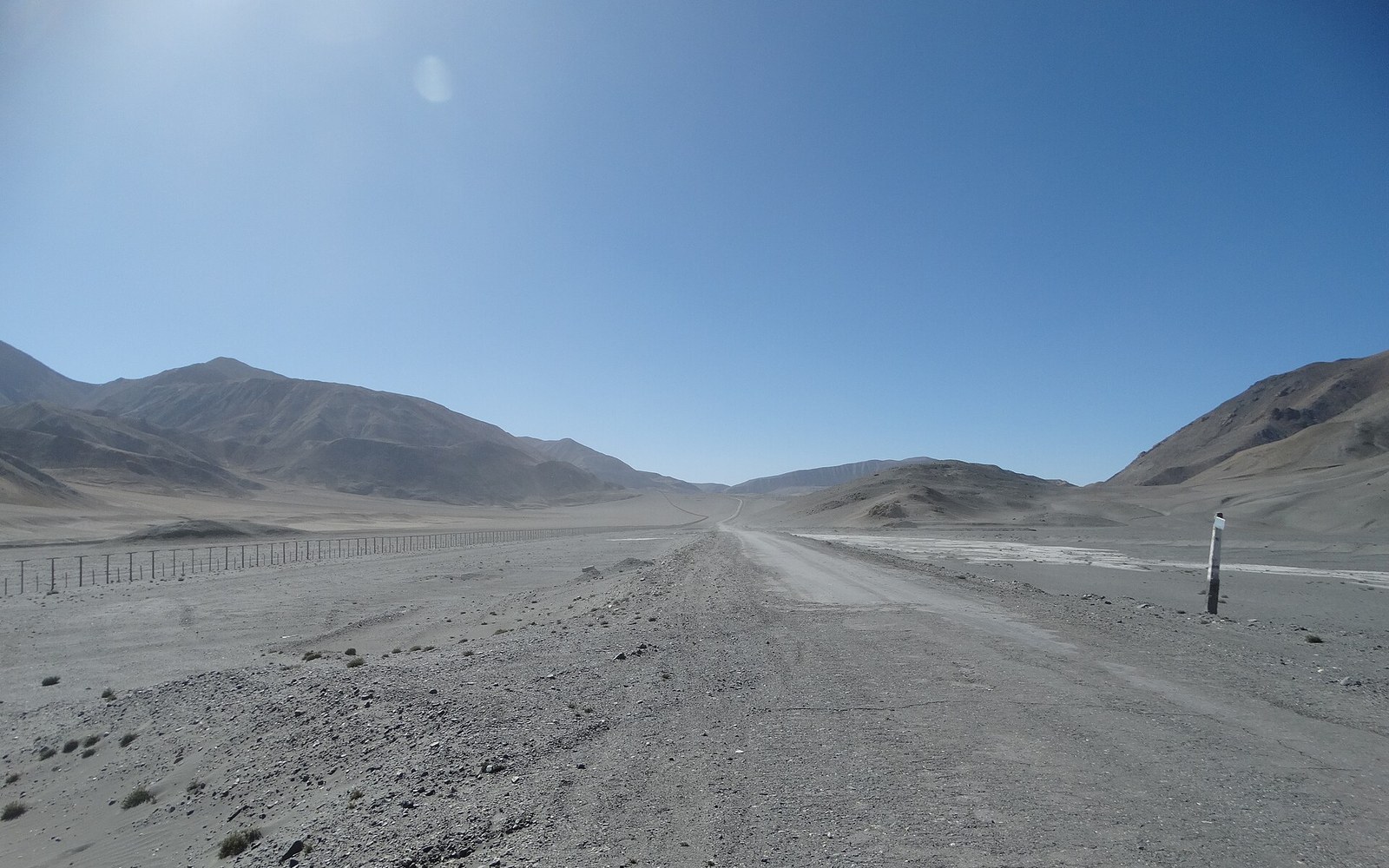
That is the inversion. Most roads exist to get you off them. The Pamir Highway — the M41, built by Soviet engineers across some of the highest, driest terrain in Central Asia, running roughly from Osh in Kyrgyzstan south and east across Tajikistan's Gorno-Badakhshan Autonomous Region — does not work that way. The destination it offers is mostly itself: altitude, space, the sensation of being very far inside something enormous.
Osh is the beginning or the end depending on which direction you travel, and either way it functions as the place that anchors you to the ordinary world long enough to eat a proper meal and sleep at a fixed elevation. The city is old — a trading crossroads for centuries, with the great rock of Sulaiman-Too at its centre, a UNESCO World Heritage Site that Babur, founder of the Mughal Empire, is said to have visited repeatedly for its view. There are bazaars, a chaos of marshrutky and shared taxis on the main square, and the recognizable business of a city that still earns its living partly through movement. You eat laghman. You change money. You find a car going south.
The Car and What It Carries
The shared taxi system on the Pamir route works on the same logic as everywhere else — it leaves when it is full — but the distances involved give the system a different weight. A shared taxi in Phnom Penh might mean an hour across flat delta roads. Here it means a day, sometimes longer, across passes that exceed four thousand metres, on a surface that ranges from rough asphalt to graded gravel to stretches where the road seems to be making an argument with the mountain about who has the right of way.
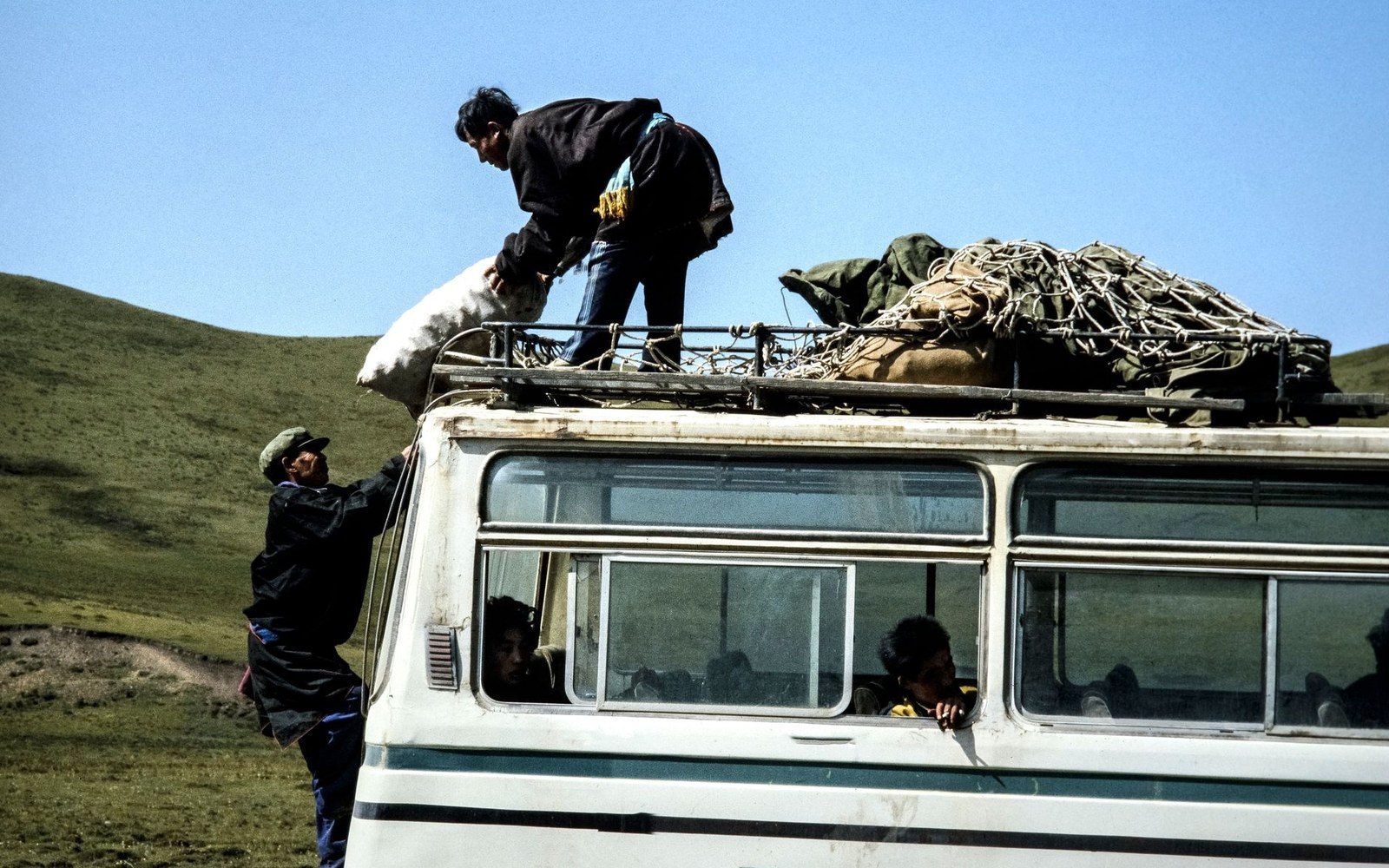
The vehicle is usually a Mitsubishi Delica or a Soviet-era workhorse, and it is filled with rather more than four passengers' worth of material. Bags of rice. A spare wheel strapped to the roof. Someone's engine parts wrapped in sacking. The back seat holds three adults and as much of the cargo as could not go above. This is not inefficiency; it is the logic of a road where there are few vehicles and resupply is genuinely sparse. The car is doing several jobs at once.
Your fellow passengers are going to real places for real reasons. Farmers returning from the city. A teacher with a box of school materials. A man who will tell you he is simply going home, which turns out to mean a village so remote it appears on none of your maps. The road is a working road, not a scenic loop — and that fact, more than the scenery itself, is what gives it its character. You are a passenger in someone else's daily infrastructure, and the mountains are the backdrop to that rather than the point of the exercise for everyone except you.
The passes impose their own rhythm. The Kyzyl-Art Pass at the Kyrgyzstan-Tajikistan border sits above four thousand metres, and the border procedure there — the stamp ceremony that every land crossing runs on — happens in a wind that does not negotiate. You collect your exit stamp, walk the short neutral ground, collect your entry stamp. The officers are thorough and unhurried. The sky is the colour of hammered tin. Then you descend into the Wakhan corridor's orbit and the landscape changes register entirely: less alpine severity, more ancient aridity, the Panj River forming the Afghan border to the south, brown and purposeful.
What the Road Does to Time
Long mountain roads do something specific to a day. The hours do not pass the way they do on a flat highway, where you can watch the kilometre markers and calculate your arrival. On the Pamir Highway the calculation keeps being revised by the road surface, by a puncture, by a stop at a spring that the driver treats as non-negotiable, by a herd of yaks that has its own views about the right of way. You stop timing and start watching instead.
The plateau sections — and there are long ones, the road crossing the Murghab District in Tajikistan through a landscape that looks engineered by removal, everything stripped back to rock and sky — produce a particular kind of passenger passivity that is not boredom. The German word Fernweh gets used a lot in travel writing, usually lazily, but there is something genuinely apt about it here: a longing for distance rather than for a specific place. The Pamir Highway is one of the few roads that seems built to satisfy that feeling rather than merely tolerate it.
Murghab itself is a small town at altitude, a staging post rather than a destination, where you can eat, sleep and renegotiate your onward plans. The market is modest; the guesthouses are mostly family homes with a room to spare. People here deal in information as much as goods: which section of road is currently passable, where the fuel stops reliably have fuel, whether the Wakhan detour is worth the extra day given the season. This is practical intelligence, not tourism, and it circulates in the way that information circulates in remote places — through whoever arrived most recently.
The food at altitude is simple and sufficient. Bread, which appears everywhere and in every country as the one constant provision, is here a dense round loaf baked in a cylindrical oven. There is tea, always, served with care. Fat and carbohydrate predominate because the body at altitude burns them quickly. You stop being fussy very fast, and then you stop noticing you've stopped being fussy, which is one of the better things a long road does to a person.
Arriving at the End as at a Beginning
Reaching Osh from the south — or leaving it heading south — the city announces itself with an increase in traffic, the reappearance of phone signal, the slight cognitive disorientation of being back at a place where things happen quickly. The bazaar near the centre, the Jayma Bazaar along the Ak-Buura River, is one of the largest in Central Asia, and after a week on the plateau it reads as almost hallucinatory in its density and colour. Bolts of fabric, cooking pots, mobile phone accessories, dried fruit, live animals and cut meat all occupying adjacent stalls.
Bishkek is the capital, seven or so hours north by shared taxi on a better road, and it has the infrastructure of a capital city — embassies, banks, larger guesthouses — but Osh is where you feel the Pamir logic most clearly, because Osh is where the road either begins to pull at you or has just finished doing so.
The question people ask, before and after: what is there to see? It is a reasonable question and a slightly beside-the-point one. You see mountains of a scale that makes European Alpine travel feel like a rehearsal. You see the Panj from above. You see small settlements that exist at altitudes where existence requires constant negotiation with the environment. But that verb — see — undersells what the road actually does. It puts you inside a landscape for long enough that you start to take on some of its qualities: patience, a tolerance for uncertainty, a recalibration of what counts as progress.
The Pamir Highway is not efficient. It is not comfortable. It will revise your schedule and your assumptions about what a day can contain. These are not complaints. They are the reasons to take it rather than reasons to avoid it — the road insisting, across several hundred kilometres of altitude and emptiness, that how you go somewhere is not separate from where you end up being.