At most overland border crossings, someone finds you before you find them. You are still on the neutral ground, bag over one shoulder, when a man appears with a calculator and an unhurried expression. He quotes a number. You don't know if it's good. You say the number back to him as a question. He adjusts slightly. This is not a scam in progress — this is the market, operating in the only space where it can.
Street exchange and kiosk exchange exist for a simple reason: banks are urban, slow and indifferent to Sunday mornings and Kyrgyz mountain passes. In Sary-Tash, the last real settlement before the Pamir Highway climbs toward the Tajik border, there is no bank branch. There is a shop that sells bread, dried noodles and spare sim cards, and the woman at the counter will change currency if the notes are clean and the denominations aren't confusing. The rate is roughly fair; she has no competitor within a day's drive, but she also needs to be used again next week.
In larger cities the geography shifts. Phnom Penh's markets and Harare's trading areas have semi-permanent money-changers at fixed stalls or behind grilles, operating openly. Zimbabwe runs on two currencies and the people who sit between them — who know the day's spread, who have a relationship with the taxi drivers and market wholesalers — are providing a genuine clearing function. In Bishkek, licensed exchange booths operate on nearly every commercial block; rates are posted on boards outside and change with the session. You can walk past five in two minutes and pick the best.
What actually matters
Clean notes, straight edges. This rule is consistent across every country covered here. A torn dollar that has been taped is refused everywhere. Older-series notes from some currencies are rejected on sight. The logic is the same whether you're at a border kiosk in Bolivia or a market stall in Lagos: the money-changer has to move that note to someone else, and if someone else won't take it, they're holding a loss. Bring the newest-looking notes you have.
Large denominations are sometimes a problem and sometimes a premium — it depends on who is changing them. At a small kiosk they represent a float risk, and the rate may be marginally worse. At a major market booth, a stack of high-denomination notes is easier than a mess of small ones. Ask before handing anything over.
The calculator is neutral ground in itself. A quoted rate means nothing until you type in your amount and see the return. Type it yourself. Any genuine operator will hand you the calculator and let you check. The ones who pull it back tend to be the ones not offering you the rate on the screen.
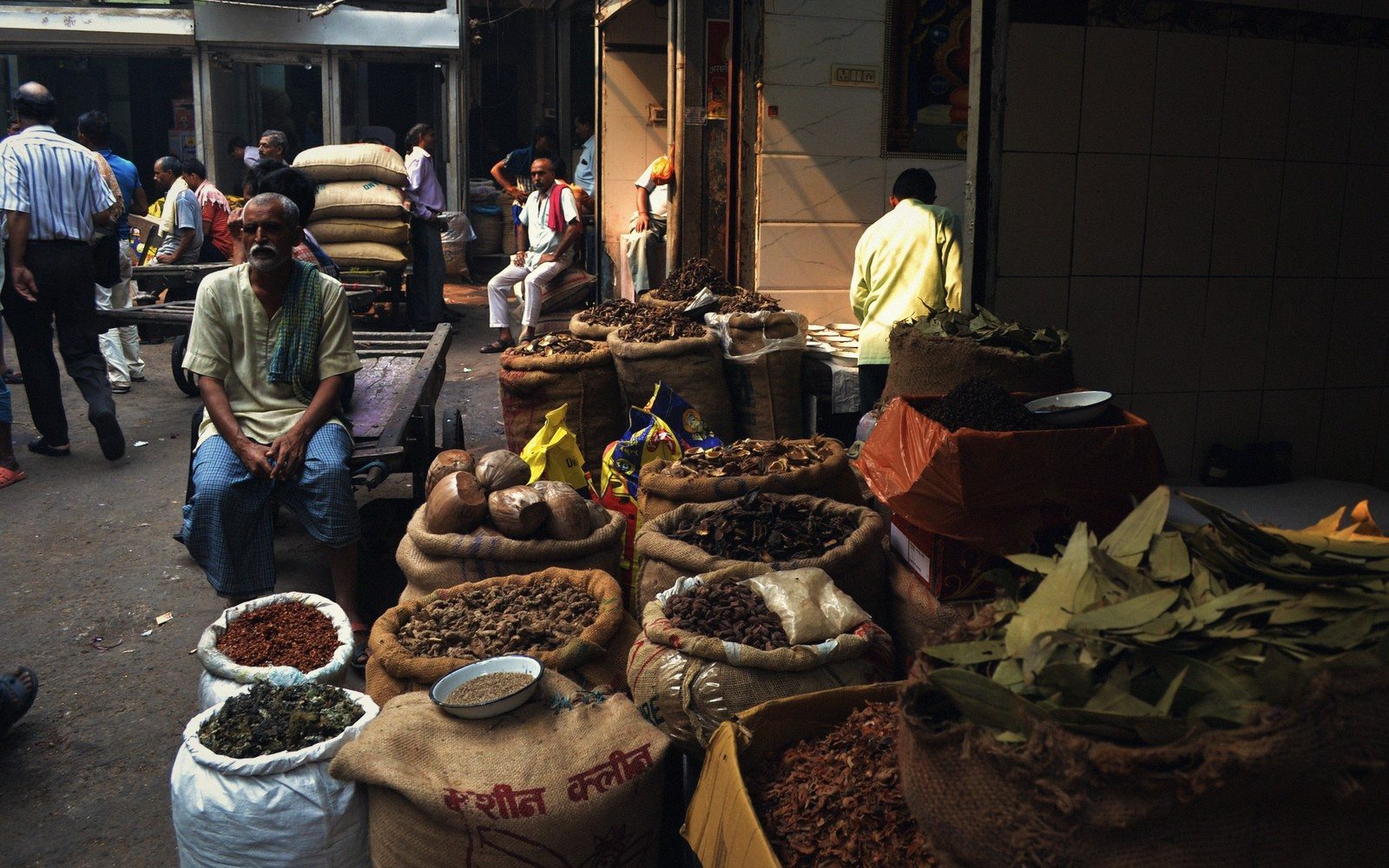
Aleppo's gold market, Sana'a's old city souqs, La Paz's Witches' Market street — these are places where commerce is dense and informal exchange is embedded in the daily economy. The man changing money outside a bus station in Lagos is not operating in the shadows; he is operating in the gap between official hours and actual need. His margin is thin and his information is good. He knows this morning's rate because he has to.
Keep a small amount of local currency from your previous stop when you cross. Not much — enough for a shared taxi to the first town, a meal, a sim card. The rate at the border is rarely the best rate. But arriving with nothing except foreign notes and an optimistic expression is its own negotiation, and it starts from a weaker position than you need to be in.