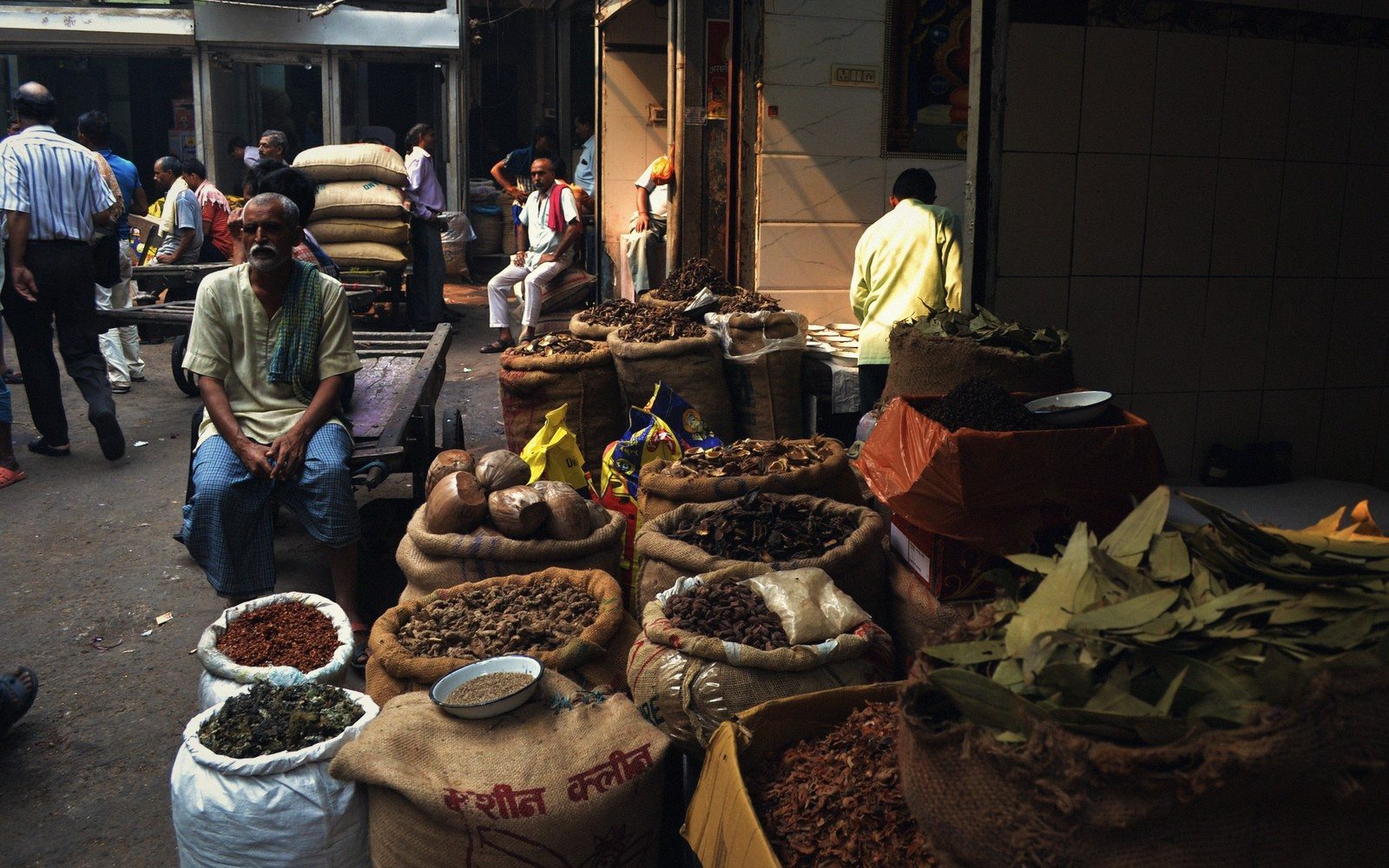
The meal that doesn't require a seat, a menu or a fixed hour.
The Counter Is the Kitchen
Somewhere between Phnom Penh and Kampot, a woman runs a cart from which she sells bowls of rice soup at the price of a local wage earner's breakfast. There is no chair. You take your bowl to the edge of the road and stand facing the traffic, or you crouch on your heels the way everyone else does, and you eat quickly because the soup is hot and the bus driver has already looked at his phone twice. The meal is complete. Nothing about it requires improvement.
This is the roadside meal: a cuisine defined not by region or ingredient but by form. It exists wherever people move — along the main road into Potosí, in the alleys behind Aleppo's covered markets, at the edge of every bus station forecourt in Lagos. The counter, the cart, the folding table with a gas burner underneath: these are the kitchen. The standing position is not a compromise. It is the correct posture for food eaten on a schedule that belongs to somebody else.
What Gets Served
The food itself is always cheap, always hot, always suited to eating in under ten minutes. In La Paz it is api and a pastry: a thick purple maize drink, spiced, served in a plastic cup alongside a pastel fried while you wait. In Harare and Bulawayo it is a paper cone of roasted maize from a brazier tended by someone who has been there since before dawn. In Bishkek and out towards Osh, the transition between bakeries and the road happens through the window of whatever you're travelling in — a woman appears, loaves are passed through, coins return, the car moves. The bread arrives in your lap. That is the transaction.
In Sana'a's old city, the ground-floor windows of tower houses open early and men buy bread still warm from the communal tandoor, folding it over a smear of bint al-sahn honey or dipping it directly into the bowl of ful on the sill beside them. In Damascus the equivalent is a circle of sesame bread bought from a tray carried on someone's head and eaten walking toward the bus. Neither involves a plate. The meal is in your hands.
The shared taxi stop is the most reliable place to find standing food. A shared taxi waits for a full load, and that waiting happens somewhere — usually a forecourt or a street corner where vendors have understood, over years, that passengers stand around with nothing to do and money still in their pockets. The food at these stops is never tourist food. It is priced for the person catching the early connection, not the one with a guidebook.
The Meal in Motion
There is a hierarchy to roadside eating that no one enforces but everyone observes. The soup stall demands a pause, even a brief one. The meat skewer can be carried. The piece of fried dough is eaten walking. The drink from the sealed plastic bag — sweet tea, juice, something lime-coloured — is consumed in three pulls and the bag dropped in a bin or on the ground, depending on what infrastructure is available.
What you almost never find at a roadside counter is a menu, a price list or a wait longer than it takes to fill a bowl. The transaction is efficient because the seller's margin is small. The cook has been making the same dish since four in the morning and knows the timing to the second. You are not a diner being guided through choices. You are a person who needs to eat before the car leaves, and the stall exists to meet that need with no ceremony beyond handing you something hot.
The meal will not be in the guidebook. It will probably be the best thing you eat that day.