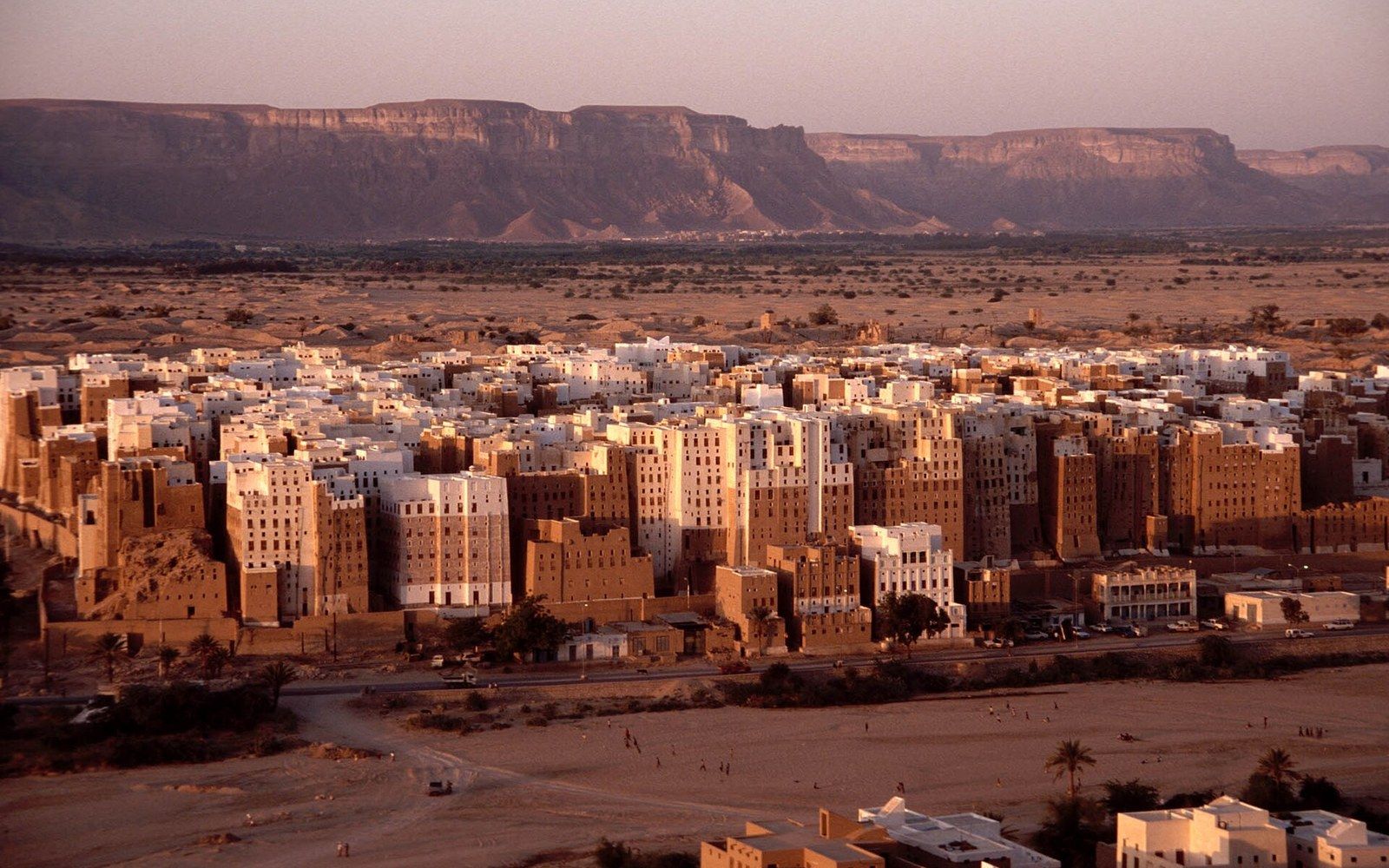
There is a logic to the old city that announces itself before you have fully arrived. The towers come first — rising five, six, seven storeys from a base no wider than a generous living room, their upper windows fringed with white gypsum tracery that catches the low morning light like something embroidered rather than built. In most old cities the eye travels along facades, across squares. Here it travels upward, and keeps going.
Sana'a's medina — the part within the old walls, a UNESCO World Heritage Site since 1986 — is built almost entirely from stone and brick: the dark volcanic stone that forms the lower courses, and above it the warm brown mudbrick that gives the towers their particular colour, somewhere between terracotta and dried clay and the dust of the surrounding plateau. The plateau sits at roughly 2,300 metres, which means the light is thin and bright and the evenings are cold regardless of the season. The buildings know this. Walls are thick. Windows are placed to catch afternoon warmth and shut it in.
A tower house in the old city is organised vertically by social function in a way that makes perfect sense once you understand it and seems counterintuitive until you do. The ground floor holds storage and sometimes livestock. Above that, service rooms, a well, the kitchen. The family's living quarters rise through the middle floors. At the top — the mafraj, the room of windows — is where men gather in the afternoon to chew qat, talk and watch the city below. The mafraj is not incidental; it is the point of the house. Everything below it is the ladder. The alabaster and stained-glass fanlights set into the upper walls of these rooms transmit light as colour rather than clarity, filtering the afternoon into amber, blue and green across whoever is sitting beneath them. There is an argument that the mafraj is the finest domestic room in the Islamic world, and it is not a weak argument.
What is sold and what is baked
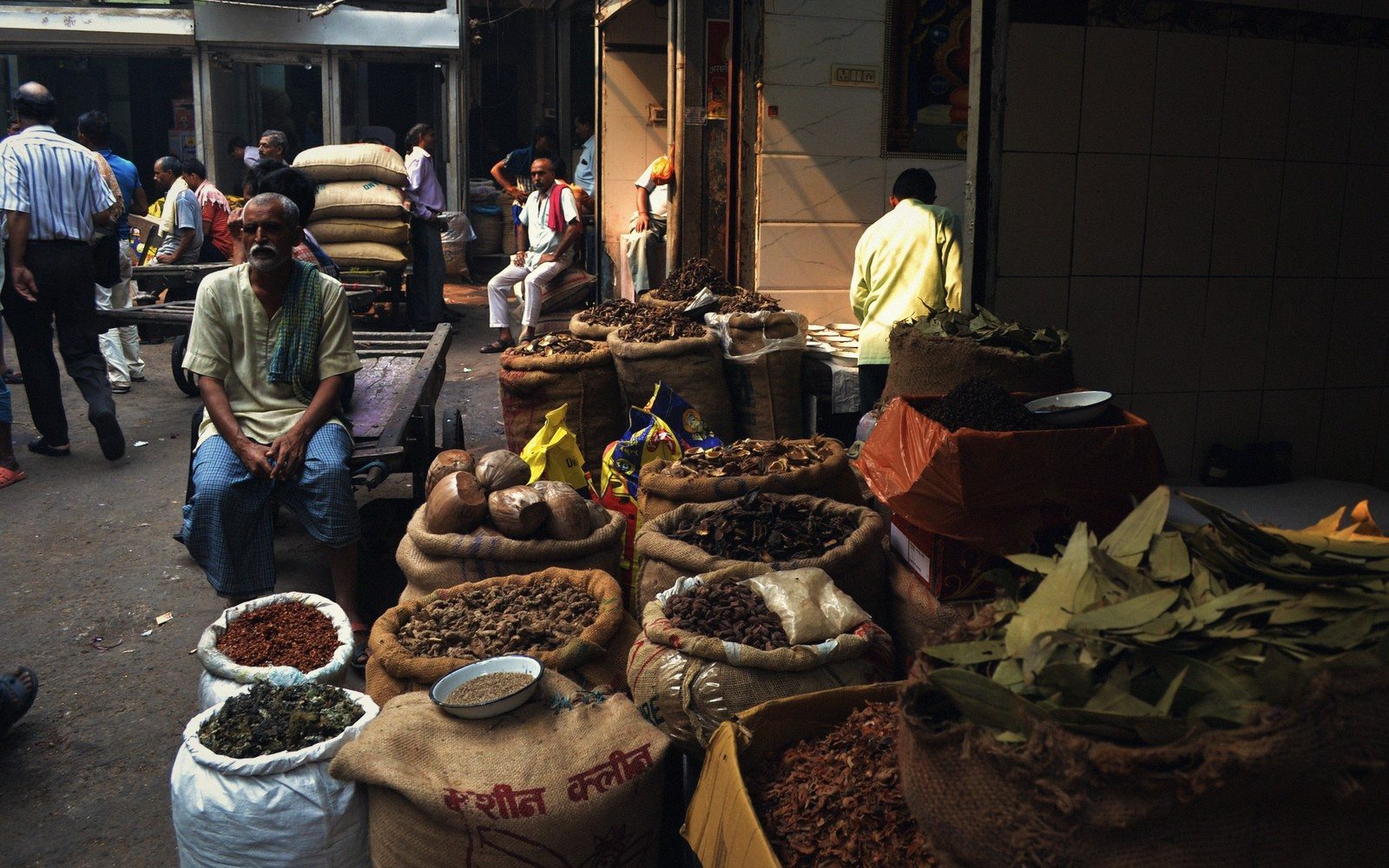
The souqs of the old city are organised by trade in the way that most old Islamic commercial districts are, though the categories can still surprise you. The spice souq, the raisin souq, the copper and silverwork, the jambiyas — the curved daggers worn by men at the waist, which function as formal dress rather than weapons in any practical sense — each has its quarter, its smell, its particular quality of noise. Visiting merchants have been organising themselves this way in Sana'a for more than a millennium. The organisation persists because it works: buyers know where to go, sellers cluster their competition because the foot traffic a cluster generates is worth more than the exclusivity it surrenders.
The bread is baked in the early morning and again around midday, and the smell of it moves through the lanes ahead of you like a rumour. Yemeni flatbread — lahoh in its spongy, injera-adjacent form; khobz in its thinner, crispier incarnations — comes out of clay ovens sunk into the floor of small bakeries that are barely more than a room and a hatch. You pay very little, you eat it immediately, you fold it around whatever the stall beside the bakery is offering. Saltah, the national stew of fenugreek foam, meat and vegetables, comes in a stone pot still bubbling from the heat. You eat standing at a counter or sitting on a low bench with no particular ceremony. The transaction is quick. The food is good.
The lanes between buildings are sometimes barely wide enough for two people to pass with luggage. This is not a design flaw; it is insulation from wind, shade from sun, and a shared understanding that public space is narrow but continuous. Cats treat the rooflines as their own transit system. Children materialise from doorways. Old men sit on stone steps with the settled authority of people who have sat on those same steps most of their lives. A foreigner walking through is noted, greeted, occasionally asked where they are from, and then allowed to continue without performance or pressure. The old city is an inhabited place, not a museum with residents.
What remains
The mudbrick towers are not maintenance-free. They require re-rendering, re-pointing, re-glazing; they require the sustained attention of people who know how to do those things and have materials to do them with. The old city has always been a living negotiation between the buildings and the people inside them, and that negotiation continues. Some towers show fresh rendering on one face and bare earth on another. Some of the stained-glass fanlights have been replaced with plain glass. Some ground floors that were once storage are now small shops selling phone credit or plastic goods. These are not signs of decay so much as evidence of inhabitation: the buildings are used, adapted, argued with. A city whose old quarter is perfectly preserved is usually a city whose old quarter nobody can afford to live in anymore. That is not the situation here.
The Bab al-Yemen — the Gate of Yemen, the main southern entry to the old city — is the place where the medina meets the newer city most visibly. Taxis idle outside it. Women sell fruit and vegetables laid out on mats. The gate itself is a massive stone archway, heavily restored at various points, that has served as the city's main entry for centuries. Travellers arriving by road from the south would have passed under it as the formal threshold between the world they came from and the city. The instinct is still there, even now: something changes as you walk through it, the street narrows, the towers close in above you, the noise shifts register. You are inside.
The plateau light that made the mafraj windows worth building still does what it always did in the late afternoon. The gypsum tracery still performs its function — decorative, yes, but also marking the building's identity in a city where every tower is someone's home and every family knew their own windows from a street below. The bread still comes out of the clay ovens. The spice souq still smells of cumin and dried lemon. The cats still own the rooftops.
Old cities survive because people go on living in them and finding them worth the maintenance. Sana'a's old city is still standing because, for a very long time and through a great deal, the people inside it have decided that it should.