The Arithmetic of Discomfort
The seat reclines forty degrees, maybe forty-five. Enough to feel like a gesture toward sleep, not enough to deliver it. You find out in the first hour whether your neck will cooperate, and it usually won't. The window is cold against your forehead and faintly greasy, but you press against it anyway because it is the only surface that doesn't move when the road bends. Somewhere behind you a child has been asleep since departure. You note this without bitterness.
Night buses are sold on the logic of economy: you pay for the seat, you get the journey and, notionally, the sleep. Skip the guesthouse, bank the hours, arrive fresh. The arithmetic only works if you can actually sleep, which most people can't, not fully, and so what you get instead is a long education in the gap between intention and outcome. This is useful knowledge. Most of overland travel runs on exactly that gap.
What happens in that gap is not nothing. The bus empties out the obvious distractions — the view, the landscape you came for — and leaves you with the interior version of the journey: who is on the bus at midnight, what they're carrying, how the driver handles a mountain curve at speed without waking anyone. On a night bus between La Paz and the altiplano, between Harare and Bulawayo, between Phnom Penh and Kampot, the cast is almost always the same: vendors who worked a morning market and are heading home, students going back after the weekend, a family unit whose internal economy you will never quite decode. Nobody is travelling for scenery. Everyone is going somewhere real.
The 4am Arrival
The arrival is its own problem. Not a bad one, but a specific one that the night bus inflicts on you regardless of destination, regardless of whether the schedule said 5am or 6am, because night buses run early as often as late and the driver sees no particular reason to hold the last kilometres back.
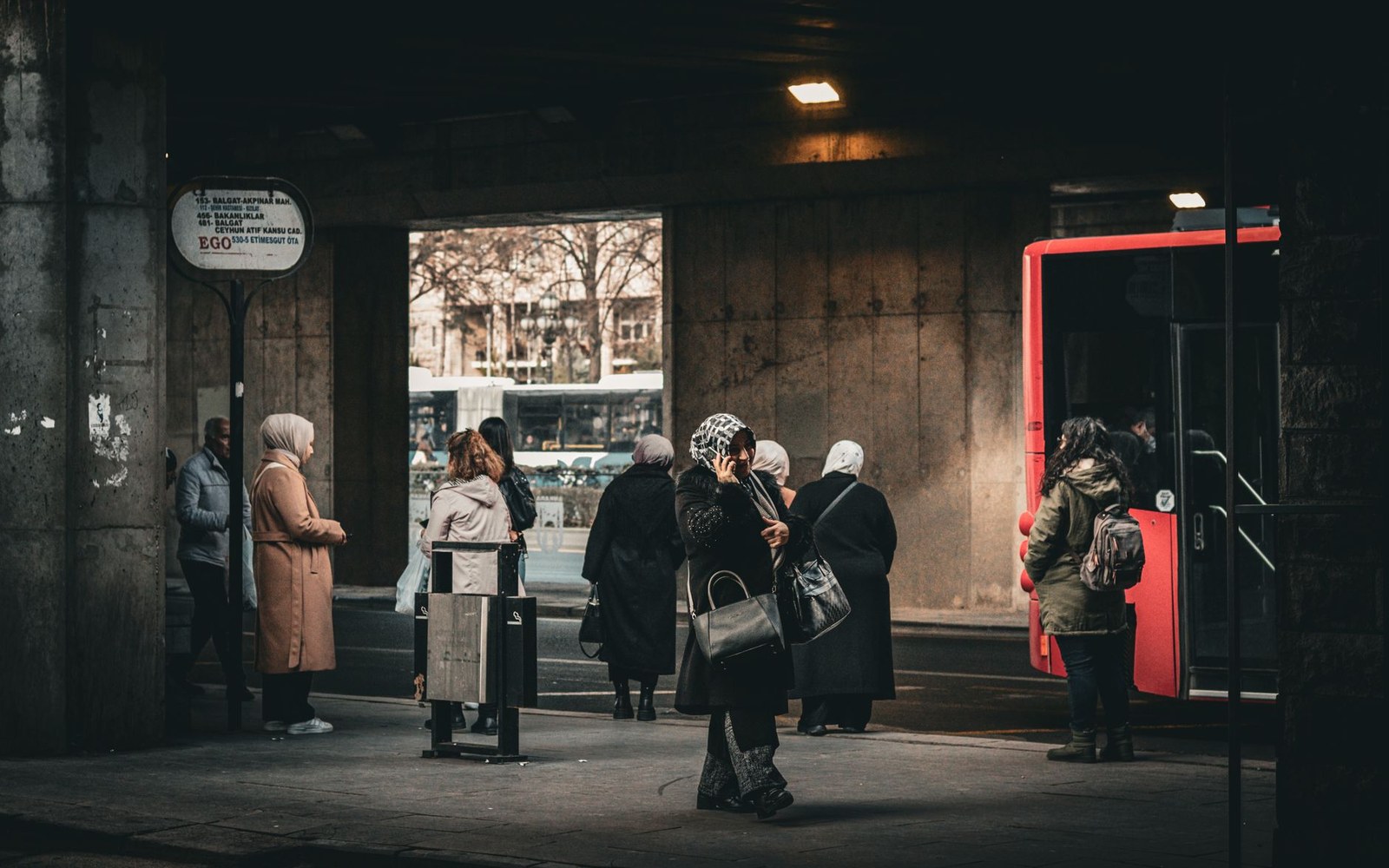
Four in the morning has a texture unlike any other hour. The bus station, if there is one, is half-lit and populated by people who seem to have been there always — a woman asleep across three chairs, a man with a thermos who may or may not be waiting for someone. The town outside has not yet made its decision about the day. Shutters are down. A bus station at dawn reveals a version of a city that the city doesn't much advertise: provisional, a little damp, entirely honest.
You have two options. You can find a chair and wait for daylight, which costs nothing and teaches you what the station sounds like as it wakes up. Or you can find whatever is open — a bakery running its first batch, a tea stall already lit for the drivers coming off overnight runs — and pay a small amount for warmth and something to hold. Both are reasonable. Neither is the guesthouse bed you half-imagined when you booked the ticket.
What the 4am arrival actually does to a day is restructure it. The morning is already spent by the time the rest of the city arrives in it, which means you have seen the place before it was ready to be seen, which is a different kind of looking. By ten o'clock you feel simultaneously exhausted and strangely ahead. You have been here for hours. You have watched the light change from black to grey to the specific pale yellow of a provincial main street deciding to open. You have eaten something standing up. You know where the taps are.
The night bus doesn't cheat you of sleep exactly. It trades it for something harder to name: a low-grade intimacy with the machinery of how places begin their days, before the version of themselves they show to visitors has fully assembled. Whether that's a good exchange depends on how you feel about arriving somewhere before it is ready for you, and whether you are patient enough to wait while it gets there.
You almost always are, by the time you arrive. That's what the journey was for.